
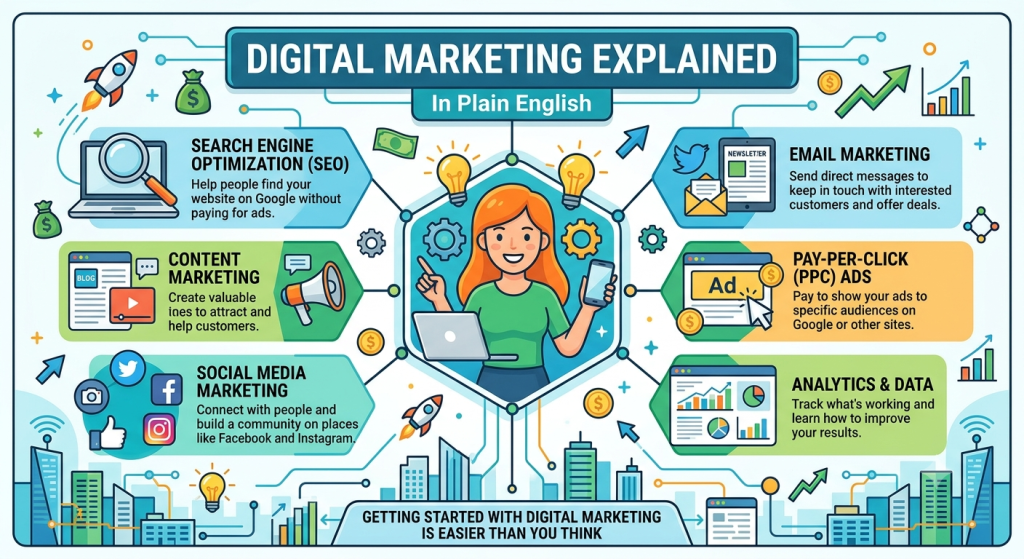
Digital Marketing Explained in Plain English
Digital marketing explained in plain English is simply the process of using the internet and digital channels to promote a business, product, service, or personal brand. Instead of using confusing jargon, this guide explains online marketing with simple examples and easy language.
In this article, you will learn what digital marketing means, why it matters, how SEO, social media, content marketing, email marketing, and PPC work, and how beginners can get started.
What Is Digital Marketing? A Plain English Explanation
Digital marketing is any type of marketing that takes place through digital channels. These channels can include search engines, websites, social media platforms, email, mobile apps, and paid advertising platforms.
The main purpose of digital marketing is to attract people, build interest, and turn interested visitors into customers. For example, someone might search Google for “best headphones for work.” A company can reach that person with a helpful blog post, a product page, or a paid search advertisement.
Unlike traditional marketing, online marketing is flexible and measurable. Businesses can track website visits, ad clicks, email opens, product purchases, and other actions. This information helps them understand what works and what needs improvement.
Why Digital Marketing Matters for Businesses
Digital marketing matters because people spend a large part of their day online. Customers search for information, compare products, read reviews, watch videos, and communicate with businesses through digital platforms.
This creates an opportunity for businesses of every size. Even a small company can compete with larger brands by creating useful content, understanding its audience, and choosing the right marketing channels.
Cost is another reason digital marketing is important. A business can start with a website, blog, social media account, or email list without needing a huge budget. Paid advertising can also be controlled by setting daily spending limits and targeting specific audiences.
Main Types of Digital Marketing
Digital marketing includes several different methods. Most successful businesses use a combination of channels instead of relying on only one.
Search Engine Optimization
Search engine optimization, or SEO, is the process of improving a website so it can appear more prominently in search engine results.
SEO may involve:
-
- Using relevant keywords.
-
- Writing helpful and original content.
-
- Improving website speed.
-
- Making pages easy to navigate.
-
- Optimizing titles, headings, and descriptions.
-
- Ensuring the website works well on mobile devices.
SEO usually takes time, but it can attract steady traffic over the long term.
Content Marketing
Content marketing involves creating useful information that attracts and helps a target audience. Content can include:
-
- Blog posts.
-
- Videos.
-
- Guides.
-
- Infographics.
-
- Podcasts.
-
- Case studies.
-
- Social media posts.
Instead of focusing only on direct sales, content marketing solves problems and answers questions. For example, a fitness business might publish articles about beginner workout plans or healthy meal ideas. Helpful content can build trust and encourage people to return to the business.
Social Media Marketing
Social media marketing uses platforms such as Instagram, Facebook, LinkedIn, YouTube, and X to connect with an audience.
Businesses use social media to:
-
- Share educational content.
-
- Promote products and services.
-
- Answer customer questions.
-
- Build brand awareness.
-
- Collect feedback.
-
- Create a community.
Social media allows businesses to interact with people directly. Users can comment, like, share, or send messages, making these platforms useful for engagement and relationship building.
Email Marketing
Email marketing involves sending messages to people who have given permission to hear from a business. These messages may include helpful advice, company news, product updates, special offers, or reminders.
Email marketing can help a business:
-
- Bring visitors back to its website.
-
- Build customer loyalty.
-
- Promote new products.
-
- Encourage repeat purchases.
-
- Maintain relationships with existing customers.
Personalized and useful emails are more likely to receive attention than messages focused only on selling.
Pay-Per-Click Advertising
Pay-per-click advertising, commonly called PPC, is a form of online advertising where businesses pay when someone clicks on an ad.
PPC ads may appear on:
-
- Google search results.
-
- Social media platforms.
-
- Websites.
-
- Shopping platforms.
-
- Video services.
PPC can provide fast visibility for a product, service, or special offer. However, businesses need to choose suitable keywords, target the right audience, and monitor their spending carefully.
Affiliate and Influencer Marketing
Affiliate marketing occurs when another person or business promotes a product and receives a commission for generating a sale or lead.
Influencer marketing is similar, but the promotion comes from a content creator who already has an established audience. Both methods can work well because people often pay attention to recommendations from individuals they know or trust.
How Digital Marketing Works
Digital marketing explained in plain English follows a simple process: find the right audience, choose suitable channels, create useful messages, and measure the results.
First, a business identifies its target audience. It needs to understand who its ideal customers are, what problems they have, and where they spend time online.
Next, the business chooses the most suitable marketing channels. A local service provider might focus on SEO and Google Business Profile optimization. A visual brand may benefit from Instagram and YouTube, while a B2B company may focus on LinkedIn and email marketing.
After choosing the channels, the business creates content or campaigns designed to attract attention and encourage action. The desired action could be visiting a website, joining an email list, requesting a quote, or making a purchase.
Finally, the business measures performance. Important metrics may include website traffic, clicks, leads, sales, engagement, and conversions. This data shows what is working and where improvements are needed.
Benefits of Digital Marketing for beginers
Digital marketing offers several important benefits for businesses.
Wider Reach
A business can reach customers locally, nationally, or internationally. Even a small company can attract people outside its immediate location through a website and online content.
Better Targeting
Online marketing allows businesses to target audiences based on factors such as location, interests, age, online behavior, and search intent. This can make campaigns more relevant.
Measurable Results
Businesses can track how many people view a page, click an advertisement, open an email, or complete a purchase. These measurements make it easier to evaluate performance.
Flexible Campaigns
Digital campaigns can be changed quickly. A business can update a blog post, edit an advertisement, adjust its budget, or change its social media strategy without starting from the beginning.
Stronger Customer Relationships
Regularly sharing useful information and responding to questions can help a business build trust. Customers are more likely to remember and recommend brands that provide helpful experiences.
Common Digital Marketing Mistakes Beginners Make
Many beginners believe digital marketing is only about posting on social media or running advertisements. In reality, it includes planning, content creation, audience research, analytics, and customer communication.
Common mistakes include:
-
- Trying to use every platform at the same time.
-
- Posting without a clear goal.
-
- Ignoring SEO.
-
- Writing only for search engines instead of readers.
-
- Failing to track performance.
-
- Expecting immediate results.
-
- Changing strategies too often.
A better approach is to start with one or two suitable channels and use them consistently. It is usually more effective to manage two channels well than to manage six channels poorly.
How to Start with Digital Marketing
If you are new to digital marketing, begin by learning about your audience. Consider the questions they ask, the problems they face, and the type of content they prefer.
Then choose one or two channels that match your goals. For example:
-
- A local business may start with SEO and Google Business Profile optimization.
-
- A visual brand may focus on Instagram and YouTube.
-
- A B2B company may use LinkedIn and email marketing.
-
- An online store may combine SEO, content, social media, and PPC.
Next, create simple and useful content. Focus on answering real questions instead of promoting your business in every message. Track your results and improve your strategy based on what the data shows.
Digital Marketing Explained in Plain English: Final Thoughts
Digital marketing explained in plain English means promoting a business, product, service, or brand through online channels. It includes SEO, content marketing, social media, email marketing, PPC, affiliate marketing, and other digital strategies.
Digital marketing is not limited to experts or large companies. Beginners, creators, freelancers, and small businesses can learn the basics and use them effectively.
The most important principle is to be helpful, consistent, and focused on real people. When you understand your audience and provide genuine value, you create a strong foundation for long-term online growth.